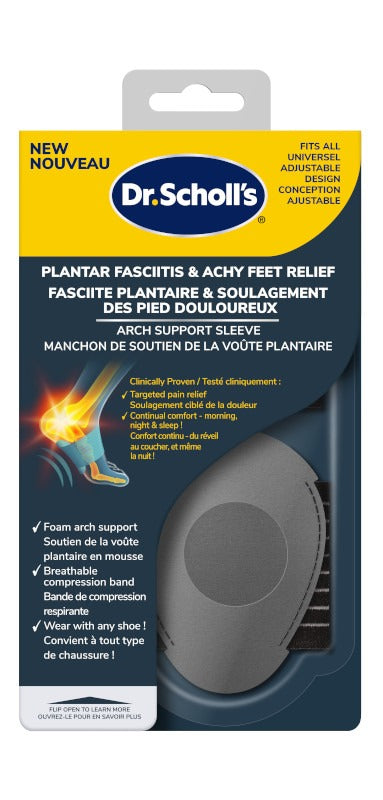
There are a number of ways to relieve plantar fasciitis pain. Doctors usually recommend conservative at-home remedies as a first step in reducing pain. These include:
• Rest — You may need to give your foot a chance to heal by avoiding high-impact exercise for a period of time. Consider low-impact athletic activities such as swimming and cycling until your pain resolves.
• Ice — Cold therapy can help ease the inflammation that causes pain. You can apply ice to the bottom of the foot three or four times a day for 15 to 20 minutes at a time. Cover your foot with a sock or thin layer of fabric when icing to protect the skin.
• OTC NSAIDs — Over-the-counter non-steroidal anti-inflammatory drugs such as aspirin, ibuprofen and naproxen can help relieve both pain and inflammation associated with plantar fasciitis.
• Stretching exercises — A physical therapist can recommend a number of different stretching exercises to help relieve discomfort from plantar fasciitis.
See your doctor if you don’t get relief from plantar fasciitis pain after trying at-home remedies. You may require stronger treatments, including:
• Prescription medications – When over-the-counter NSAIDs aren’t effective, your doctor may prescribe stronger pain relievers or anti-inflammatory medications.
• Cortisone shots – A doctor can administer steroid injections in order to reduce inflammation from plantar fasciitis.
• Surgery – In rare cases of severe plantar fasciitis, surgery may be recommended.
Recovering from plantar fasciitis requires patience. It can take months to a year for the plantar fascia to heal. Healing time will vary depending on severity, mitigating efforts and individual health factors. Ask your doctor if you have concerns or questions.